







Shanghai LINK Instruments is a professional manufacturer of ophthalmic equipment including OCT systems, Auto Refractometer, and Slit Lamp devices.
Optical Coherence Tomography (OCT) is a non-invasive, light-based imaging technology that provides high-resolution, cross-sectional, and 3D images of the retina and its distinct layers. It is a critical diagnostic tool in modern ophthalmology, allowing for the early detection and monitoring of conditions such as glaucoma, macular degeneration, and diabetic retinopathy.
Choosing the right OCT machine is not just a technical decision—it directly impacts diagnostic accuracy, workflow efficiency, and patient outcomes in your clinic.
What You Need to Know About OCT Machines
What is an OCT machine?
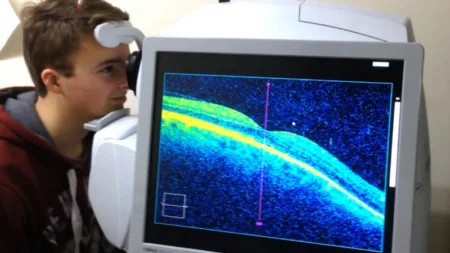
OCT machines are sophisticated diagnostic instruments that use light to create detailed, “near-microscopic” images of the eye’s internal structures. It allows eye care professionals to detect structural changes that are not visible through standard examination methods.
How an OCT Machine Works
The core principle is interferometry, which is similar to how sonar or ultrasound uses sound waves, but OCT uses near-infrared light.
- Light Source: The machine emits a low-coherence, broadband light beam.
- Beam Splitting: A beamsplitter divides this light into two paths: the sample arm (directed into the eye) and the reference arm (a fixed path within the machine).
- Interference Pattern: Light reflects back from the different layers of the retina. When this “echoed” light recombines with light from the reference arm, it creates an interference pattern.
- Data Conversion: A detector captures this pattern, and a computer processes it into the cross-sectional 2D or 3D images clinicians use for diagnosis.
What is OCT used for?
OCT is widely used for diagnosing and monitoring:
- Glaucoma
- Age-related macular degeneration (AMD)
- Diabetic retinopathy
- Retinal edema and macular holes
Who needs an OCT machine?
- Ophthalmology clinics
- Hospitals
- Specialized eye care centers
- Advanced optical practices
Key Factors When Choosing an OCT Machine
When evaluating different OCT systems, focus on these critical factors:
- Scan Speed: Measured in A-scans per second. Faster speeds reduce motion artifacts (blurring from eye movement) and improve patient comfort.
- Axial Resolution: This determines how clearly the machine can distinguish between the fine layers of the retina. Higher resolution (smaller micron values) means better detail.
- Segmentation Software: The machine’s ability to automatically and accurately “trace” the boundaries between retinal layers is vital for measuring thickness and tracking disease progression.
- Integration: How well the machine’s data connects to existing Electronic Medical Record (EMR) systems and whether it offers advanced modules like OCT Angiography (OCTA) for viewing blood vessels without dye.
Types of OCT Machines
OCT machines are categorized by their underlying technology (how they process light) and their clinical application (which part of the eye they image).
1. Categorization by Technology
The primary difference between these types is how they measure the reflection of light, which affects scan speed and image clarity.
- Spectral-Domain OCT (SD-OCT): The standard in modern eye clinics. It uses a spectrometer to measure many wavelengths of light simultaneously, allowing for scan speeds up to 80000 A-scans per second.
- Swept-Source OCT (SS-OCT): A newer technology that uses a laser to sweep through wavelengths rapidly. It typically uses a longer wavelength (1050 nm) for deeper penetration, making it the best choice for imaging the choroid and sclera.
Examples: ZEISS PLEX Elite 9000 and Topcon DRI OCT Triton. - Time-Domain OCT (TD-OCT): The original technology, which uses a moving reference mirror to measure one signal at a time. It is significantly slower than modern versions and is rarely used in primary care today.
2. Categorization by Clinical Use
Machines are also built or adapted to focus on specific ocular regions.
- Posterior Segment OCT: Optimized for viewing the back of the eye, specifically the retina, macula, and optic nerve. It is the primary tool for managing glaucoma and macular degeneration.
- Anterior Segment OCT (AS-OCT): Designed with optics to image the front of the eye, including the cornea, iris, and lens. It is used for planning laser eye surgery and checking the “angles” for certain types of glaucoma.
- OCT Angiography (OCTA): A specialized “functional” mode available on many high-end SD or SS machines. It uses repeated scans to detect blood flow, creating a 3D map of the eye’s microvasculature without the need for dye injections.
SD-OCT vs SS-OCT: Key Differences
| Feature | SD-OCT | SS-OCT |
|---|---|---|
| Scan Speed | Medium | High |
| Imaging Depth | Standard | Deep |
| Cost | Lower | Higher |
| Best For | General clinics | Advanced diagnosis |
How to Choose the Right OCT Machine for Your Clinic
Follow this step-by-step approach:
1. Define Your Clinical Needs
- Basic screening → SD-OCT
- Advanced diagnostics → SS-OCT
2. Set a Realistic Budget
Consider not only the purchase price but also maintenance, software updates, and training costs.
3. Evaluate Image Quality
Higher image clarity leads to more accurate diagnosis and better patient trust.
4. Check Software Capabilities
Ensure the system supports:
- Automated reports
- Data storage
- Progress tracking
5. Choose a Reliable Manufacturer
Look for:
- Certifications (CE, FDA)
- Industry experience
- Global support network
Trusted Supplier Consideration
When selecting an OCT machine for your clinic, working with a reliable supplier is critical.
Shanghai LINK Instruments offers a wide range of ophthalmic equipment designed for clinics, hospitals, and optical shops. Among their products, the OCT-1000 Optical Coherence Tomography Machine stands out as a high-performance solution for modern eye care.
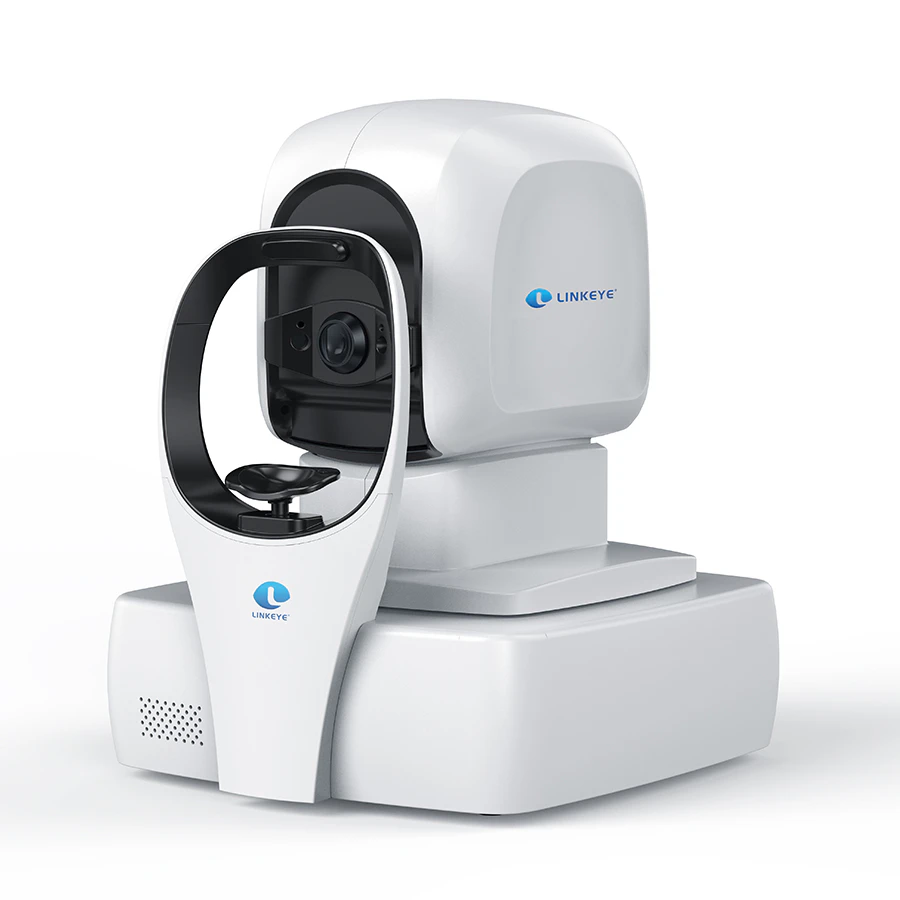
Key highlights of the OCT-1000:
- High-resolution retinal imaging for accurate diagnosis
- Fast scanning and user-friendly interface
- Durable design for long-term clinic use
- Supports comprehensive retinal analysis software
For clinics looking for reliability, accuracy, and advanced functionality, the Shanghai LINK OCT-1000 is an excellent choice. You can learn more or request a quote here.
Conclusion
Selecting the right OCT machine depends on your clinic’s size, diagnostic requirements, and budget. Whether you choose SD-OCT for general use or SS-OCT for advanced imaging, investing in the right system will significantly enhance diagnostic accuracy and patient care.
In today’s competitive healthcare environment, a well-chosen OCT device is not just equipment—it’s a long-term investment in your clinic’s growth and reputation.
FAQs
Is the OCT-1000 suitable for high-volume clinics?
Yes, it is designed for efficiency with automatic operation features, including auto-alignment and tracking. These capabilities reduce exam times and minimize the need for specialized technical staff.
How does the “3D Mapping” feature benefit diagnosis?
This allows doctors to “peel back” layers or view the eye from any angle, making it easier to pinpoint the exact volume of a macular hole or the height of subretinal fluid that might be missed in traditional 2D scans.
Does the OCT test use harmful radiation?
No. All OCT machines, including portable and desktop models, use near-infrared light waves, not X-rays or ionizing radiation. It is a non-invasive, contact-free “optical biopsy” that is safe for repeated use, even for children and pregnant patients.


