







Introduction:
The ophthalmic department may require equipment such as refractometers, tonometers, anterior segment examiners, retinal imaging systems, visual field analyzers, or OCT scanners. Each machine performs a different clinical function and has different requirements for accuracy, installation, operator training, maintenance, and regulatory documentation.
Buying an eye test machine is not simply a matter of comparing prices or selecting a familiar model. This creates a practical problem for hospitals, eye clinics, distributors, and new equipment buyers: Which eye test machine do you actually need, and how do you evaluate the manufacturer behind it?
This guide will introduce the names and functions of common ophthalmic examination devices and discuss the technical and commercial factors buyers should consider when selecting an ophthalmic equipment manufacturer.
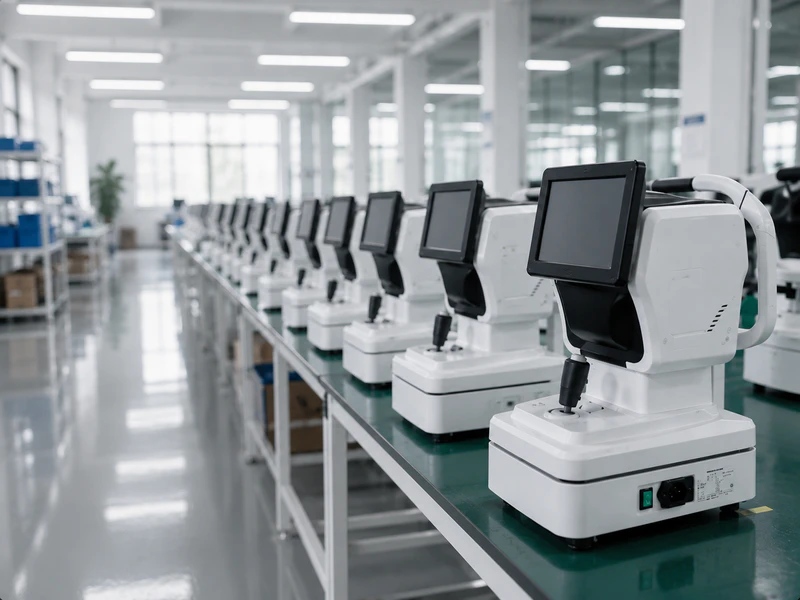
What Is an Eye Test Machine Called?
The term is commonly used to describe several types of optometric and ophthalmic diagnostic equipment used during different stages of an eye examination.
For example, an autorefractor estimates refractive error, while a tonometer measures intraocular pressure. A slit lamp provides magnified examination of eye structures, and an OCT machine produces cross-sectional images used to evaluate retinal and optic nerve structures.
For procurement teams, knowing the correct eye test machine name makes it easier to define requirements and compare quotations.
Common Eye Test Machine Names and Their Uses
| Eye Test Machine Name | Primary Function | Common Buyer / Application |
|---|---|---|
| Auto Refractometer | Estimates refractive error | Optical stores, clinics, hospitals |
| Phoropter | Refines subjective refraction | Optometrists, eye clinics |
| Slit Lamp | Magnified examination of anterior eye structures | Ophthalmology clinics, hospitals |
| Tonometer | Measures intraocular pressure | Glaucoma screening and eye exams |
| OCT Machine | Cross-sectional imaging of retinal and optic nerve structures | Hospitals, ophthalmology clinics |
| Retinal / Fundus Camera | Captures images of the retina | Eye clinics, hospitals |
| Visual Field Analyzer | Measures central and peripheral visual fields | Glaucoma and neurological assessment |
| Ophthalmoscope | Examines internal structures of the eye | Clinics and general examinations |
| Retinoscope | Assesses refractive error manually | Optometrists and ophthalmologists |
| Ultrasound Scanner | Ultrasound-based examination of ocular structures | Ophthalmology departments |
The right combination depends on the services your facility provides.
A basic refraction room and a hospital ophthalmology department should not be equipped using the same purchasing list.
Match the Eye Test Machine to the Clinical Application
Before comparing manufacturers, define what the machine must accomplish.
For Refraction and Prescription
A typical refraction workflow may include:
- Auto refractometer
- Manual or digital phoropter
- Visual acuity chart
- Trial lens set and frame
- Retinoscope
- PD meter
An auto refractometer can provide a rapid baseline measurement, while the phoropter allows the practitioner to refine the prescription through subjective testing.
Optical stores and high-volume clinics should also consider workflow speed, data transfer, operator training, and integration between devices.
For Anterior Eye Examination
A slit lamp is a fundamental diagnostic instrument in ophthalmology.
When comparing slit lamps, look beyond magnification specifications.
Consider:
- Optical clarity
- Magnification range
- Illumination control
- Slit width and height adjustment
- Mechanical movement
- Chin-rest adjustment
- Digital imaging compatibility
- Camera and software options
For distributors, replacement parts and calibration support are also important because the equipment may remain in service for years.
For Intraocular Pressure Measurement
The tonometer is used to measure intraocular pressure (IOP).
Available designs include non-contact, rebound, and applanation technologies.
The appropriate option depends on the clinical workflow, patient population, measurement requirements, consumables, and operator preferences.
Hospitals and distributors should therefore compare the measurement method and intended use, rather than treating all tonometers as interchangeable products.
For Retinal and Structural Imaging
More advanced ophthalmology departments may require:
- OCT machines
- Retinal cameras
- Ophthalmic ultrasound scanners
- Visual field analyzers
These systems require closer evaluation of imaging performance, software, data management, service capability, training, and long-term technical support.
For a more detailed explanation of individual devices, see Best Eye Exam Machines: Top Ophthalmic Equipment Guide 2026.
How to Evaluate an Eye Test Machine Manufacturer
Once the required equipment is clear, the next step is evaluating the supplier.
Price matters, particularly for distributors purchasing multiple units. But it should not be the only comparison point.
A lower initial quotation can become expensive if the supplier cannot provide documentation, replacement components, calibration support, or consistent product quality.
1. Check Manufacturing Experience
Ask whether the company is an actual manufacturer, a trading company, or a distributor.
For OEM and bulk procurement, manufacturing capability can affect:
- Product consistency
- Customization
- Production lead time
- Spare-parts availability
- Engineering support
- Quality control
- Long-term supply
LINKEYE, operated by Shanghai LINK Instruments, states that it has more than 15 years of experience in ophthalmic and optometry equipment. Its Shanghai operation combines design, R&D, manufacturing, quality control, global sales, and after-sales support.
This integrated model can be useful for distributors and project buyers who need multiple equipment categories from one supplier.
2. Review the Manufacturer’s Product Range
A broad product portfolio matters when setting up an entire eye clinic or building a distribution business.
LINKEYE’s ophthalmic equipment portfolio currently includes:
- Ultrasound scanners
- OCT machines
- Tonometers
- Retinal cameras
- Corneal topographers
- Phaco emulsifiers
- Ophthalmic lasers
- Portable slit lamps
- Digital slit lamps
- Visual field analyzers
- Operation microscopes
- Eye axial length measurement equipment
- Ophthalmic tables and chairs
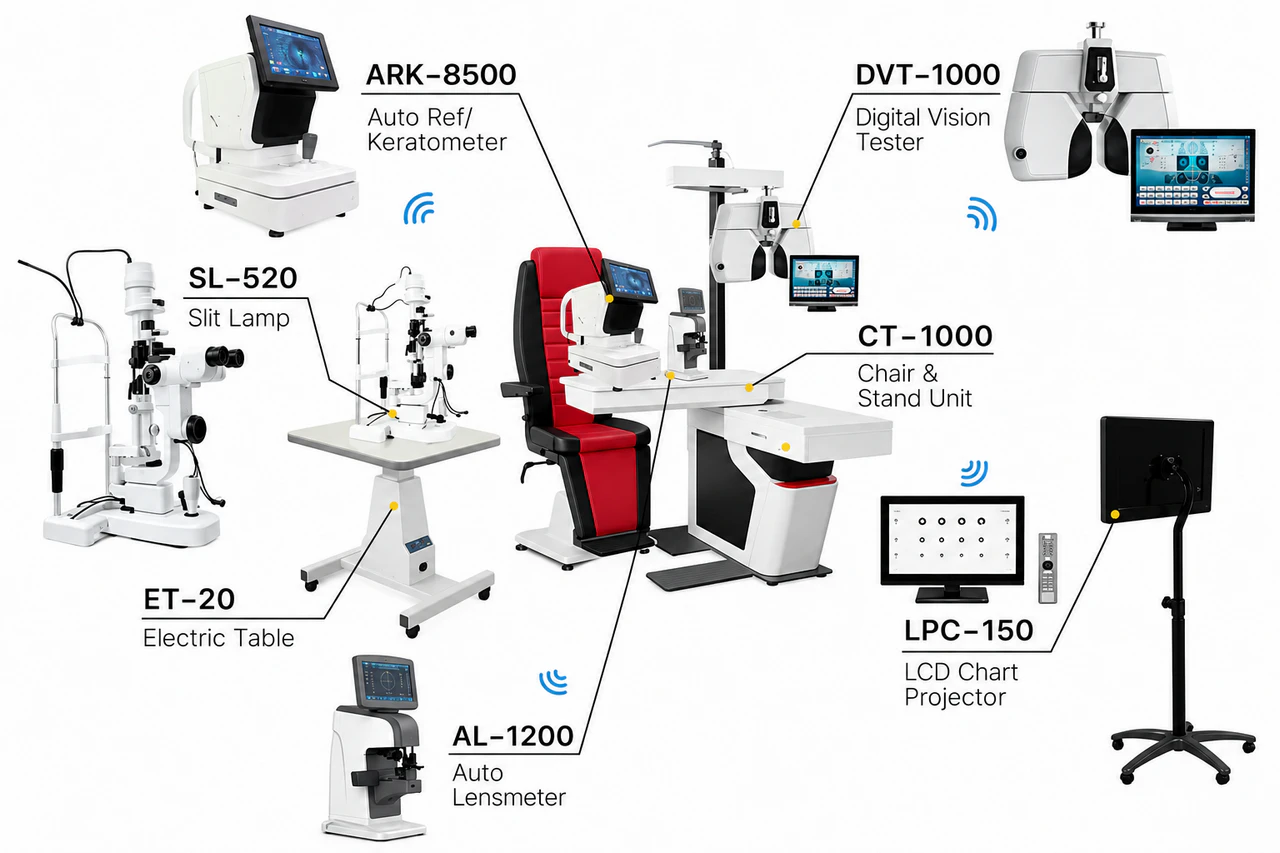
Its optometry range also includes autorefractors, lensmeters, phoropters, chart projectors, trial lens systems, PD meters, vision screeners, retinoscopes, ophthalmoscopes, and combined ophthalmic units.
For distributors, sourcing related categories from one supplier can simplify communication, shipping coordination, documentation, and after-sales management.
3. Verify Certifications — Don’t Just Look for a Logo
Medical equipment buyers should verify applicable regulatory and quality documentation before placing an order.
LINKEYE states that its manufacturing and product portfolio is supported by ISO 9001, ISO 13485, CE, and FDA-related certifications/documentation.
However, procurement teams should verify certification at the specific product/model and destination-market level.
Do not assume that a certification logo shown on a manufacturer’s website automatically means every model has identical regulatory status in every market.
Before ordering, request:
- Certificate copies
- Certificate numbers where applicable
- Product/model coverage
- Declaration of Conformity where applicable
- Quality management documentation
- Test reports required for your market
- Registration or listing information where relevant

This is especially important for distributors that will register or resell equipment locally.
4. Evaluate Quality Control and Pre-Shipment Inspection
An ophthalmic device should not leave the factory simply because assembly is complete.
Ask the supplier what is actually tested before shipment.
Depending on the equipment, inspection may include:
- Functional testing
- Optical inspection
- Measurement verification
- Mechanical movement checks
- Electrical checks
- Software checks
- Appearance inspection
- Accessory verification
- Packaging inspection
LINKEYE states that individual ophthalmic equipment undergoes quality-control testing and that products are shipped with quality and performance verification records.
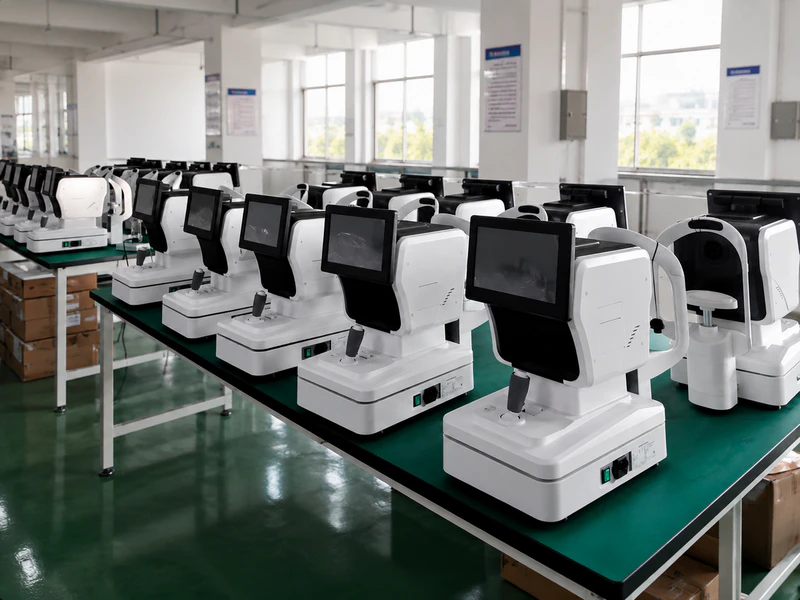
For large orders, buyers should also discuss whether pre-shipment inspection or third-party inspection can be arranged.
5. Ask About OEM and ODM Capability
For distributors and established medical equipment brands, customization may be more important than purchasing a standard catalog product.
OEM/ODM requirements can include:
- Private-label branding
- Logo customization
- Housing or appearance changes
- Packaging
- User manuals
- Accessories
- Product configurations
- Software or interface requirements
- Market-specific documentation
LINKEYE provides OEM/ODM support and states that its engineering and R&D capabilities support customized ophthalmic and optometry equipment projects.
Before requesting customization, send the manufacturer a structured requirement document rather than simply asking, “Can you do OEM?”
Include the target market, expected annual quantity, required changes, certification requirements, packaging, and desired delivery schedule.
6. Examine Production Capacity and Lead Time
Production capacity becomes especially important for distributors, tenders, and multi-clinic projects.
A manufacturer that can supply ten units successfully may not necessarily be able to deliver hundreds of units on schedule with the same consistency.
Ask:
- What is the standard production lead time?
- How does lead time change for OEM orders?
- What is the production capacity for this specific product?
- Are critical components kept in stock?
- Can production be scaled for repeat orders?
LINKEYE reports a 1,885 m² Shanghai facility with three production lines, while some of its product categories state production capacity of up to 4,500 sets per month and shipment within 5–7 days for applicable standard products.
Actual lead time should still be confirmed for the specific model, quantity, customization, and destination.
7. Check Warranty and Technical Support
An eye test machine is a long-term investment.
The relationship with the manufacturer should therefore continue after the equipment arrives.
Before ordering, ask:
- What does the warranty cover?
- How long is the warranty?
- Who handles technical troubleshooting?
- Are replacement parts available?
- Can problems be diagnosed remotely?
- Are service manuals available?
- Is calibration support provided?
- What happens after the warranty expires?
LINKEYE states that its standard products normally include a 12-month warranty. Its published service policy also states that maintenance requests are answered within 12 hours and remote technical support is provided within 24 hours.
Replacement parts are available at cost after the warranty period according to the company’s published warranty policy.
These details should still be confirmed in the final sales contract for each order.
What Should Distributors Ask Before Ordering?
Distributors face different risks from individual clinics.
A clinic may purchase one machine. A distributor needs to think about dozens or hundreds of future installations.
Before establishing a supply relationship, ask for:
- Current product catalog
- Distributor pricing
- MOQ by model
- OEM/ODM conditions
- Certification documents
- Sample policy
- Production lead times
- Warranty terms
- Spare-parts list
- Technical manuals
- Packaging specifications
- Distributor or territory policies
A useful first order is often not the largest possible order.
For a new supplier relationship, sample evaluation or a smaller initial batch can help verify product performance, packaging, communication, documentation, and after-sales response before scaling up.
Why Consider LINKEYE for Ophthalmic Equipment Procurement?
LINKEYE supplies optometry, ophthalmic, and optical laboratory equipment for distributors, hospitals, eye clinics, optical stores, government projects, and OEM/ODM partners.
According to its current company and product information, the main B2B capabilities include:
- 15+ years of ophthalmic equipment experience
- ISO 9001 and ISO 13485 quality management
- CE and FDA-related product certifications/documentation
- More than 80 international markets served
- 150+ customers and partners
- In-house R&D and manufacturing
- OEM/ODM support
- Broad ophthalmic and optometry product range
- Pre-shipment product inspection
- 12-month standard warranty
- International technical and after-sales support
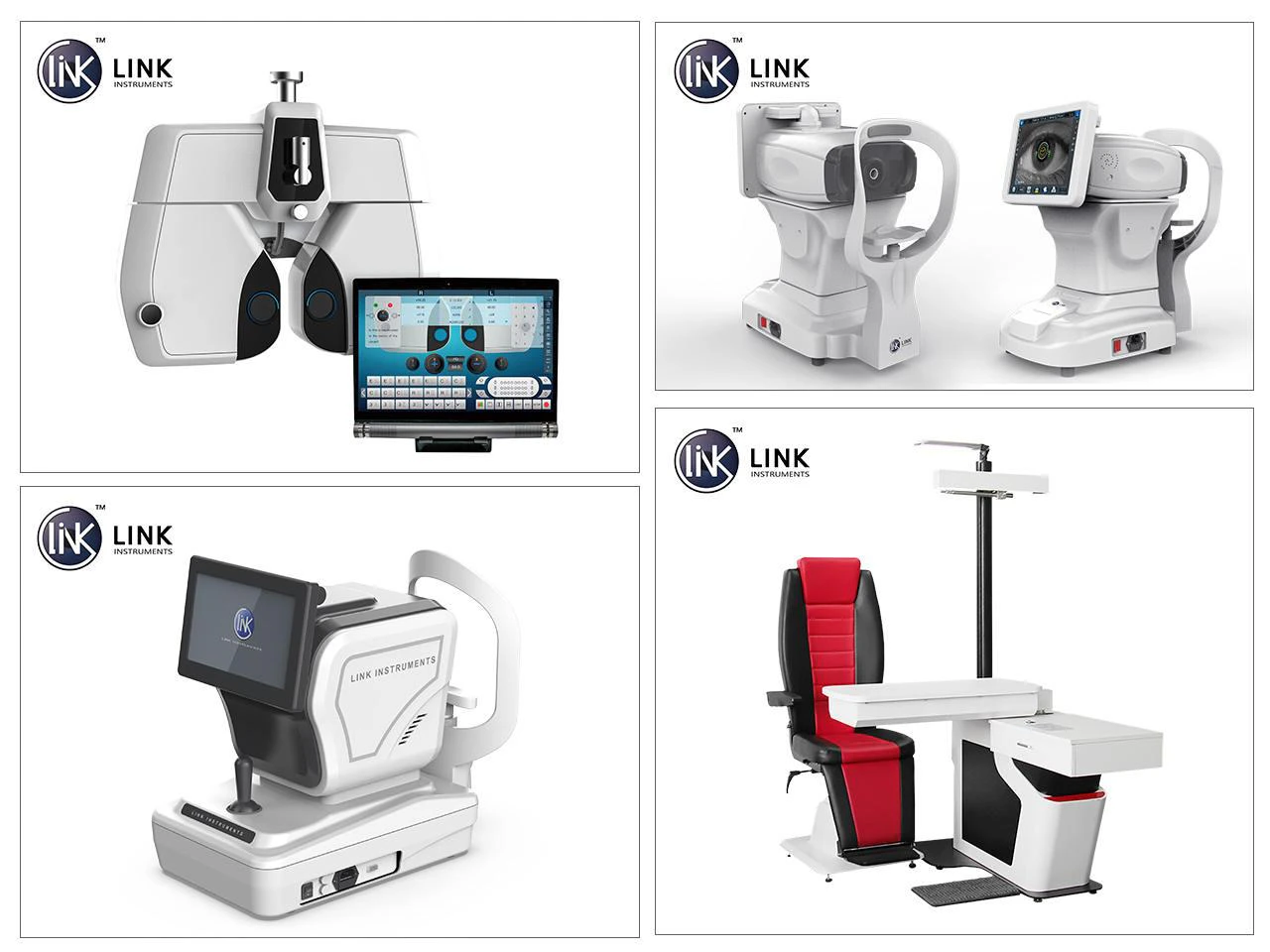
For buyers purchasing several categories, LINKEYE’s broad product portfolio also makes it possible to discuss a complete eye examination equipment solution rather than sourcing each machine separately.
FAQ About Eye Test Machines
What eye test machines does a new eye clinic need?
A new eye clinic needs a core set of diagnostic and testing machines to handle routine examinations, measure prescriptions, and screen for eye diseases. The essential equipment includes an autorefractor/keratometer, a phoropter, a slit lamp, a tonometer, a digital retinal/fundus camera, a lensometer, and a visual field analyzer. Specialist ophthalmology practices may add OCT, retinal imaging, visual field testing, ultrasound, or other diagnostic systems.
Can I order an OEM or private-label eye test machine?
Yes. LINKEYE provides OEM/ODM services for distributors and medical equipment companies.
Customization possibilities depend on the product and may include branding, packaging, configuration, accessories, appearance, or other engineering requirements. Buyers should provide expected quantities and technical requirements before requesting an OEM quotation.
What should I send when requesting an eye test machine quotation?
Provide the machine name or required clinical function, quantity, destination country, certification requirements, OEM requirements, and expected delivery schedule.
If you are setting up an entire clinic, provide your room requirements and required examinations instead of requesting prices for individual machines. This allows the supplier to recommend a more complete equipment configuration.
Conclusion:
Choose a reliable manufacturer of ophthalmic examination equipment, first identify the exact model name and clinical functions of the equipment, and then evaluate the manufacturer’s quality management system, product technical documentation, production capacity, OEM support, warranty policy, spare parts availability, and level of technical service.
For hospitals and clinics, this reduces operational risk. For distributors, these factors become even more important because product consistency and after-sales support directly affect future customers and repeat orders.
Planning an ophthalmic equipment purchase or distribution project?
Send LINKEYE your required equipment, target market, quantity, certification needs, and OEM requirements to receive a suitable product configuration and B2B quotation.
→ Explore LINKEYE Ophthalmic Equipment


