
Introduction
In an eye exam, the air puff tonometer—formally known as a Non-Contact Tonometer (NCT)—is used to screen for glaucoma by measuring Intraocular Pressure (IOP).. For optometrists, ophthalmologists, and clinic managers, keeping this machine running accurately is essential for patient safety and clinic flow.
At Shanghai Link, we understand that the reliability of your Ophthalmic Equipment directly impacts patient outcomes. With over 15 years of manufacturing expertise in Shanghai, we provide high-precision Air Puff Tonometer designed to meet the rigorous demands of global clinics.
What is an Air Puff Tonometer?
An air puff tonometer is a type of non-contact tonometer that estimates IOP by emitting a gentle, calibrated burst of air onto the cornea. The device measures the time it takes for the cornea to flatten (applanate) under this air pulse. Since higher IOP resists flattening longer, the machine calculates pressure based on the air-pulse duration and force.It quickly screens for glaucoma without touching the eye, making it non-invasive and removing the need for numbing drops.
Unlike Goldmann applanation tonometry—which requires topical anesthetic and direct contact—the air puff method is:
- Painless and non-invasive
- Quick (under 5 seconds per eye)
- Ideal for initial glaucoma screening
While slightly less precise than contact methods in extreme corneal thickness cases, modern NCTs offer excellent repeatability for routine use.
How Does an Air Puff Tonometer Work?
The air puff tonometer measures the internal pressure of the eye without ever physically touching the ocular surface. This is a major advantage for infection control and patient comfort (as it doesn’t require numbing drops).
Technology Works:
- Alignment: The patient focuses on a target light within the machine.
- Applanation: The device releases a gentle puff of air.
- Measurement: An advanced optical sensor measures the time or force required to flatten a specific area of the cornea.
- Calculation: The machine converts this data into a numerical value measured in millimeters of mercury (mmHg).
Comparison of Tonometry Methods:
| Feature | Air Puff (NCT) | Goldmann Applanation | iCare Rebound |
|---|---|---|---|
| Contact | Non-contact | Direct contact | Micro-contact |
| Anesthesia | Not required | Required (drops) | Not required |
| Ease of Use | High (Automated) | Moderate (Manual) | High (Handheld) |
| Common Use | General Screening | Diagnostic Standard | Portable/Pediatric |
Common Issues with Air Puff Tonometers and How to Fix Them
Because NCTs rely on high-precision optics and delicate air pistons, they can occasionally act up. Before calling for professional service, clinic staff can often resolve minor issues with these common fixes.
Issue: Inconsistent or “Error” Readings
- The Cause: Often caused by a dirty objective lens or a blocked air nozzle. Dust and debris can interfere with the optical sensor’s ability to “see” the corneal reflection.
- The Fix: Use a clean, dry air bulb to blow away dust. If smudges persist, use a lint-free cloth and a small amount of optical lens cleaner. Never stick sharp objects into the air nozzle.
Issue: Difficulty in Alignment
- The Cause: Patient movement or a malfunctioning chinrest motor.
- The Fix: Ensure the patient’s forehead is firmly against the headrest. If the motorized components feel “sticky,” check the tracks for obstructions. Shanghai LINK designs its Chair & Stand units and tonometers with high-durability motors to minimize these mechanical failures.
Issue: Out-of-Range Pressure Values
- The Cause: Patient “guarding” (squeezing the eyes shut or holding their breath) can artificially spike IOP.
- The Fix: Encourage the patient to breathe normally and stay relaxed. If the machine consistently reads high, verify the calibration using a test eye or secondary device.
Issue: Error Messages or Device Freezing
- The Cause: Software glitches or outdated firmware or Sensor malfunction.
- The Fix:
- Restart the device to reset its system.
- Update firmware if the manufacturer provides updates, often available on official websites like linkeyegroup.com.
- If errors continue, consult technical support.
Maintenance Tips for Longevity
- Daily Cleaning: Wipe down the chinrest and forehead rest with alcohol-free disinfectant after every patient.
- Check Calibration Daily: Use the manufacturer-provided “test eye” or calibration check every morning. If your machine is off by more than $2.0\text{ mmHg}$, it needs professional service to avoid misdiagnosing patients.
- Weekly Dusting: Cover the equipment every night with a lint-free dust cover. Dust is the primary enemy of optical sensors in Optical Lab Machinery and diagnostic tools alike.
- Software Updates: For digital models, ensure the firmware is up to date to benefit from the latest measurement algorithms.
Top-Rated Non-Contact Tonometers for 2026
For eye care providers upgrading IOP screening in 2026, non-contact tonometers continue to be favored for their speed, hygiene, and patient comfort. Among the available options, the following two models stand out for different clinical needs.
NCT-5000AB Non-Contact Air Puff Tonometer
Best for hospitals & high-volume clinics
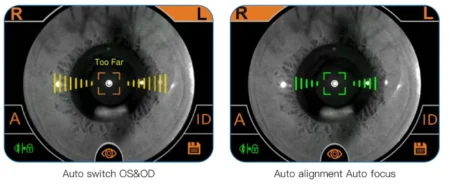
The NCT-5000AB is designed for advanced clinical environments where automation and system connectivity matter. With fully automatic 3D alignment, a motorised chinrest, and DICOM 3.0 support, it fits well into modern hospital workflows and glaucoma screening programs.
Why visitors consider it in 2026
-
Auto alignment Auto focus with minimal operator input
-
Large rotatable touch screen for flexible clinical layouts
-
Built-in safety checks and alarm system
-
Ready for EMR/PACS integration.
ST-1000 Automatic Air Puff Non-Contact Tonometer
Best for clinics & routine screening
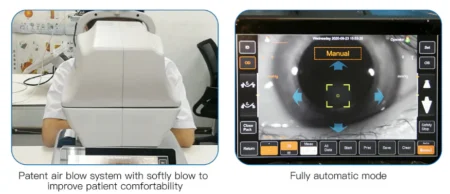
The ST-1000 focuses on simplicity and reliability. Automatic 3D positioning and bilateral measurement make it easy to use for daily IOP screening, while the soft air puff improves patient comfort during exams.
Why visitors consider it in 2026
-
Fully automatic left/right eye measurement
-
Stable and accurate IOP results
-
Easy operation with touch display
-
Optional corneal thickness measurement.
Quick Comparison
| Feature | NCT-5000AB | ST-1000 |
|---|---|---|
| Automation level | Advanced, fully automatic | Automatic |
| Target users | Hospitals, large clinics | Clinics, screening centers |
| System integration | DICOM 3.0 | Standalone |
| Patient comfort | High | High |
| Typical use case | Advanced IOP & glaucoma workflows | Routine IOP screening |
Note:
For 2026, the right non-contact tonometer depends less on raw specs and more on workflow fit. High-volume and hospital settings may favor advanced automation, while everyday clinics often prioritize speed, ease of use, and cost efficiency.
Conclusion
FAQS
A: It is an excellent screening tool for high intraocular pressure. However, if a high reading is found, doctors typically follow up with Goldmann Applanation Tonometry or an OCT scan for a definitive diagnosis.
A: No. Always use an approved optical lens cleaner. Harsh chemicals can strip the anti-reflective coatings from the sensors in your Ophthalmic Equipment.
A: The instruments used in an eye exam can detect high blood pressure. To avoid inaccurate measurements, avoid taking coffee. Alcohol also raises blood pressure and makes your eyes feel dry and irritated during the exam. Avoid alcohol the day before and the day of the exam.
A: Studies have shown that peak IOP occurs at night or in the early morning hours in two-thirds of glaucoma patients. IOP has been shown to increase by 3 to 4mm Hg when a patient is lying flat face upward.
A: Yes, some eye doctors still use the air puff test, but many have switched to newer, more comfortable, and often more accurate methods like Goldmann tonometry (which involves numbing drops and a gentle touch) or Shanghai LINK rebound tonometry (a quick, painless contact) to check eye pressure, especially for glaucoma, as these newer techniques are preferred for better patient experience and precision.
A: For a 70-year-old, normal eye pressure (IOP) generally remains in the typical adult range of 10 to 21 mmHg (millimeters of mercury), with averages around 14-16 mmHg, but “normal” is individual, depending on optic nerve health, family history, and other conditions like diabetes, requiring regular eye exams for monitoring.


