
Optometrists rely on a combination of diagnostic, examination, and optical measurement equipment to evaluate vision, detect eye conditions, and determine corrective prescriptions. Common tools include refractors for vision, slit lamps for detailed eye health checks, tonometers for glaucoma screening, fundus cameras for retinal imaging, and visual field testers for peripheral vision assessment.

What Equipment Do Optometrists Use?
Optometrists use specialized ophthalmic equipment to assess visual acuity, refractive errors, and overall eye health. Rather than relying on a single device, a standard optometry clinic operates with a system of complementary instruments, designed to provide objective measurements, subjective refinement, and clinical observation throughout an eye exam.
Here’s a breakdown of common equipment:
For Vision & Prescription:
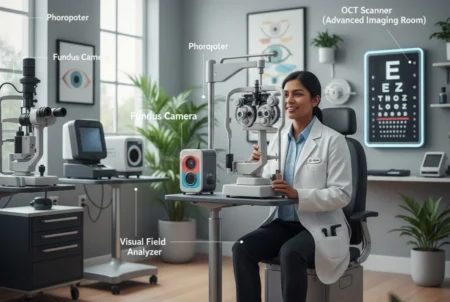
- Phoropter/Refractor(Manual and Digital): Phoropters enable optometrists to refine prescriptions through subjective testing. Manual phoropters involve rotating lenses and dials, while digital phoropters automate lens changes and data recording.
- Autorefractor: An auto refractometer is used to objectively measure refractive errors, including myopia, hyperopia, and astigmatism.
- Snellen Chart/Visual Acuity System: The eye chart (letters or symbols) to test how clearly you see at different distances.
- Retinoscope: Used to objectively measure refractive error, especially for children.
- Trial Lenses/Frames: A set of lenses and frames used with the phoropter or in free space for fine-tuning prescriptions.
For Eye Health Examination:
- Slit Lamp (Biomicroscope): The slit lamp enables detailed examination of the anterior and posterior segments of the eye, including the cornea, lens, and retina. A slit lamp provides a magnified, illuminated view of the eye’s anterior and posterior segments, essential for diagnosing cataracts, corneal injuries, glaucoma, and retinal diseases.
- Ophthalmoscope/Binocular Indirect Ophthalmoscope (BIO): Used with a light source to view the retina, optic disc, and blood vessels inside the eye.
- Tonometer: Measures intraocular pressure (IOP) to screen for glaucoma (can be contact, handheld, or non-contact).
- Retinal Camera/Fundus Camera: Captures images of the retina to monitor conditions like macular degeneration or diabetic retinopathy.
- Optical Coherence Tomographer (OCT): A sophisticated imaging tool that provides detailed cross-sectional scans of the retina and optic nerve.
- Pachymeter: Measures the thickness of the cornea.
- Visual Field Analyzer (Perimeter): Tests peripheral (side) and central vision for blind spots or defects.
Other Common Tools:
- Exam Chair & Stand: A comfortable chair and adjustable stand for instruments.
- Lensometer (Focimeter): Measures prescription and properties of eyeglass lenses.
- Pupillometer: Measures pupil size.
- Burton Lamp (UV Light): Used for contact lens fitting.
Impact on Patient Care
Every piece of equipment in an optometrist’s office plays a vital role:
- Ensuring accurate prescriptions for optimal vision correction.
- Early detection of serious eye diseases like glaucoma, cataracts, and macular degeneration, allowing for timely intervention.
- Monitoring the effectiveness of treatments and tracking disease progression.
- Providing comprehensive eye health management, often uncovering signs of systemic health issues such as diabetes or hypertension through the eyes.
How These Devices Work Together During an Eye Exam
A typical eye exam begins with objective measurement using an auto refractometer, followed by visual acuity testing. Subjective refinement is then performed with a phoropter or trial lenses. Eye health is assessed using a slit lamp and tonometer, while lensmeters are used to confirm existing prescriptions if needed. This workflow ensures both efficiency and diagnostic accuracy.
Equipment Differences by Practice Type: How to choose?
- Small clinics often prioritize essential diagnostic tools for routine exams.
- Hospitals may require advanced imaging and disease-focused instruments.
- Optical stores emphasize refraction and lens inspection equipment to support eyewear dispensing.
The Future of Eye Care: Technology at Your Service
As the American Optometric Association (AOA) emphasizes, “Comprehensive eye exams using calibrated, up-to-date equipment are critical for identifying systemic and ocular conditions before irreversible vision loss occurs” (AOA Clinical Practice Guidelines, 2023).
Conclution
Optometry equipment forms an integrated system that supports accurate vision assessment and eye health evaluation. Understanding how each device functions within the clinical workflow helps explain why optometrists rely on a combination of automated, manual, and observational tools rather than a single solution.
FAQs about Optometry Equipment
Q1: How often should I get an eye exam?
Most adults should have a comprehensive eye exam every one to two years, or as recommended by their optometrist, especially if they have existing conditions or risk factors.
Q2: How to Choose Optometry Equipment for Sale in Your Clinic?
Choosing the right optometry equipment is crucial for your clinic, because it directly impacts clinical outcomes and client base. Click Shanhgai LINK blog(How to Choose Optometry Equipment for Sale in Your Clinic?) to help you make informed choices.
Q3: Is the “puff of air” test painful?
The non-contact tonometer (NCT) “puff of air” test is generally harmless and causes only a momentary surprise, not pain.
Q4: Auto Phoropter vs Manual: Which Is Better for Clinics?
Auto phoropters are generally considered more accurate than manual ones due to reduced manual error, automated lens switching, and increased reproducibility of measurements. While manual phoropters can be accurate, the digital format minimizes the potential for human error by automating data entry and calculations, leading to more consistent and reliable results. The differences accuracy table of phoropter and manual Phoropter.


