
Choosing the right optometry equipment is crucial for your clinic, because it directly impacts clinical outcomes and client base. This blog with actionable criteria and product examples—to help you make informed choices.
What are the criteria for selecting optometry equipment?
Choosing the right optometry equipment requires careful consideration of key performance and support factors to ensure accurate, efficient, and reliable practice.
5 Key Factors for Selecting Optical Measurement Equipment:
1. Accuracy & Precision: Reliable measurements for prescriptions and assessments.
2. Resolution: High clarity and detail in captured data.
3. Ease of Use: Intuitive operation for faster workflow and fewer errors.
4. Versatility: Compatible with multiple lens types and measurement modes.
5. Maintenance & Support: Availability of calibration, warranty, and service for long-term reliability.
What you should pay attention?
Always verify that the equipment meets relevant regulatory standards and is suitable for your specific clinical or retail setting.
Which specific types of equipment should your clinic consider first?
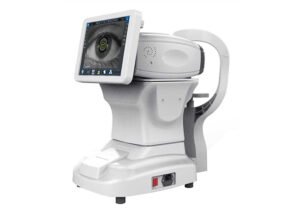
Here are some flagship categories and strong product examples, to illustrate the marketplace:
|
|
How should you prioritise equipment purchases in your clinic?
Purchasing optometry equipment requires careful planning to ensure both clinical efficiency and cost-effectiveness. Follow this step-by-step roadmap:
Start with the Core Test Lane Tool
Make sure your clinic has the essentials for basic refraction services: examination chair and stand, phoropter, trial lens set, lensmeter, auto refractor, and visual acuity system. These are the foundation of any optometry practice.
Add diagnostic and advanced tools based on services
If your clinic offers eye disease testing – such as glaucoma or retina evaluation – you will need advanced diagnostic equipment such as tonometers or OCT machines. Prioritize equipment according to the scope of services you provide.
Support optical/dispensing workflow
For clinics that manage glasses in-house, consider lens edgers, trial lens sets, frame displays and other dispensing devices to streamline operations and improve the patient experience.
Upgrade and expansion plan
As patient numbers increase or new services are added, budget is made for upgraded equipment. For example, advanced diagnostic equipment for a medium-sized optometry clinic can cost more than USD72,000.
Evaluate Total Cost of Ownership
Consider bundled packages that include equipment, training, and warranty. Factor in maintenance, consumables and possible upgrades. Annual maintenance for high-end equipment can reach 10-15% of the purchase price.
Pilot and evaluate before full rollout
When introducing new technology – such as digital refraction systems – start with a single examination lane. Assess workflow efficiency, staff training, and patient acceptance before scaling up.
When should you consider upgrading or adding new equipment?
-
Rising Patient Volume – Current instruments are creating bottlenecks, such as long wait times or patient complaints.
-
Expanding Services – Planning to offer new services (e.g., pediatric screening, retinal imaging, myopia control) that existing equipment cannot support.
-
Outdated or Unsupported Equipment – Devices that lack manufacturer support, are obsolete, or cannot integrate into digital workflows.
-
Technological Advances – Adopting new standards of care, like tele-optometry, digital refraction, or AI-assisted screening, to remain competitive.
Summary & Recommendation
Selecting optometry equipment is a strategic investment in patient care, clinic efficiency, and profitability. By focusing on key criteria—clinical suitability, budget, workflow, and supplier support—and prioritizing essential items first, clinics can ensure smooth operations and long-term value.
Shanghai Link Instruments Co., Ltd. (founded 2009) provides a full range of optometry equipment—from auto refractors and lensmeters to dispensing and lab machinery—backed by a global service network and over 15 years of experience, making them a reliable partner for clinics seeking quality and dependability.


