
For any eyewear shop, optical boutique, or small finishing lab, choosing a lens edger isn’t just about buying equipment—it’s about securing the “engine room” of your optical practice. To put it plainly, this machine is the difference between paying a lab bill and keeping that profit in-house. The 2025 landscape has shifted rapidly towards automation and handling complex high-curve lenses, meaning the wrong choice could leave you obsolete before you even start. Here is a clear, practical guide to help eyewear shop owners and optical professionals make informed decisions when investing in lens edger machinery.
What Is a Lens Edger Machine?
A lens edger machine is a specialized device used by opticians to precisely cut, shape, and finish the edges of eyeglass lenses so they fit perfectly into their chosen frames, automating tasks like grinding, beveling, grooving, and drilling for speed, accuracy, and compatibility with complex lens types and frame designs.
Key Functions:
- Cutting & Shaping: Grinds lenses to the exact contours of the frame.
- Beveling: Creates different types of bevels (like safety or step) for secure frame fitting, including high-curve or wrap-around styles.
- Grooving: Cuts grooves for semi-rimless or rimless glasses.
- Drilling: Creates precise holes for rimless mounts, even at complex angles.
- Finishing: Polishes edges and applies hydrophobic coatings to enhance lens performance.
How it Works:
- Scanning: The machine scans the frame’s shape (or uses digital data) to get exact dimensions.
- Centering: Lenses are locked in, and the optical center is aligned.
- Cutting: An automated cutting wheel (often water-cooled) grinds the lens to the traced shape.
- Finishing: Features like grooves, drills, and bevels are added with precision tools.
Operation video demonstration
@shanghai.link.ins2 MOLO-1000 Auto lens edger operation process #autorefractor #lensedger #optometry #autorefractometer #eyedoctor #lensometer #lens
Main Types of Lens Edgers
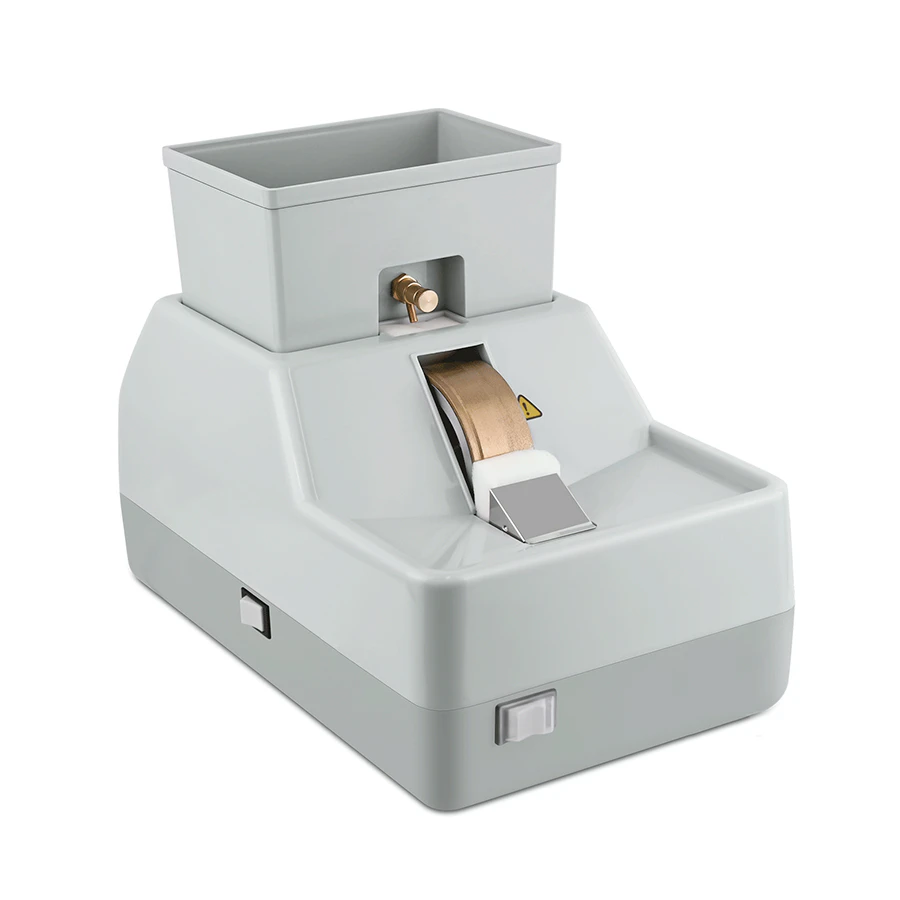
Hand Edgers:
- Description: Traditional, manual tools with a rotating grinding wheel, ideal for basic edging or small adjustments.
- Use: Simple shaping and smoothing of lens edges.
Automatic Edgers:
- Description: Digital machines that scan the frame and lens to create a precise fit without physical patterns (templates).
- Function: Perform basic cuts, milling, and sometimes safe chamfering.
Multifunction Edgers:
- Description: Highly advanced systems integrating digital measurement, 3D modeling, and various finishing tools.
- Functions: Incorporate grooving (for rimless mounts), drilling (for hole-drilled frames), polishing, and complex beveling.
How to Choose Lens Edger Machine for Eyewear Shops
1. Assess Your Shop’s Daily Volume
The first step isn’t looking at machines; it’s looking at your books. Your daily output dictates the level of automation you need:
- Low Volume (1–5 jobs/day): It may still be more cost-effective to outsource to a wholesale lab.
- Mid Volume (5–15 jobs/day): A semi-automatic or compact patternless edger is ideal. These machines offer a balance of affordability (typically $10,000–$18,000) and precision.
- High Volume (15+ jobs/day): You need a fully automatic system. High-end models can complete a lens in under 75 seconds. While the investment is higher ($30,000–$50,000+), the speed and reduced labor costs provide a faster ROI.
2. Patternless vs. Patterned Edging
In 2025, patternless edgers are the industry standard. Unlike older machines that required a physical plastic template (pattern) for every frame, patternless systems use a digital tracer to scan the frame’s shape.
- Why it matters: Patternless machines save immense amounts of storage space and allow for “shape editing,” where you can digitally tweak the lens dimensions on a touchscreen to better suit a patient’s face.
3. Essential “Bells and Whistles”
Modern edgers do far more than just grind glass or plastic. Depending on your boutique’s specialty, you should look for these features:
- High-Curve Processing: If you sell a lot of wrap-around sports frames or high-fashion “base 8” curves, ensure the machine can handle specialized beveling.
- Integrated Drilling: Essential for rimless (three-piece) mounts. An edger with a built-in drill allows you to input coordinates and walk away, rather than drilling by hand.
- Safety Beveling and Grooving: Almost all mid-to-high-end machines now offer automatic grooving for semi-rimless frames and safety beveling to smooth out sharp edges.
- Polish Features: A “high-luster” polish is a must for high-end boutiques where the aesthetic finish of the lens edge is a selling point.
4. Compatibility with Modern Materials
Ensure your chosen machine has dedicated cycles for all modern lens materials:
- Polycarbonate & Trivex: Require specific dry or specialized wet-cutting cycles to prevent melting or chipping.
- High-Index (1.67, 1.74): These materials are more brittle; the machine should have a “fragile lens” mode that adjusts the chuck pressure to prevent cracking.
- Super-Hydrophobic Coatings: Many premium lenses are extremely slippery. Look for machines with “anti-slip” technology or specialized chucks that grip coated lenses firmly during the high-speed grinding process.
5. The “Three-In-One” Workflow: Tracer, Blocker, Edger
An edging system usually consists of three components. When shopping, decide if you want them integrated or separate:
- Tracer: Scans the frame shape.
- Blocker: Aligns the lens and attaches the “block” (the handle the machine holds).
- Edger: The actual cutting unit. Many modern retail units, like the Nidek LEXCE Trend or Briot Emotion, combine these into one compact footprint—perfect for shops where lab space is limited.
6. Maintenance and Post-Sale Support
A lens edger is a high-precision robot operating in a wet, gritty environment. It will eventually need maintenance.
- Service Contracts: Before buying, ask about the proximity of technicians. If your edger goes down and you’ve promised “same-day service” to customers, you need a 24-hour repair guarantee.
- Consumables: Factor in the cost of diamond wheels, milling bits, and filtering systems.
Top Brands to Consider in 2025
| Brand | Best For | Key Strength |
| Nidek (Santinelli) | High Volume | Unmatched speed and AI-driven alignment. |
| Essilor Instruments | Premium Boutiques | High precision for complex “Mr. Blue” style jobs. |
| Briot (Visionix) | Small/Mid Shops | Intuitive “Gravitech” optical tracing (no mechanical stylus). |
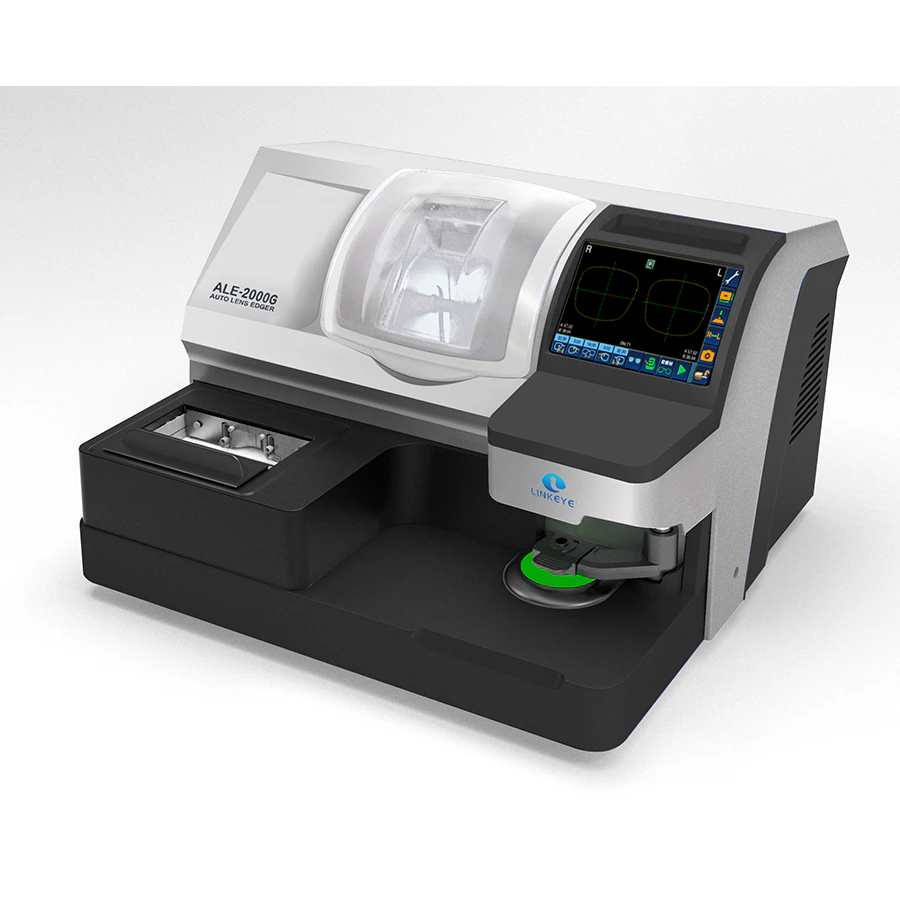
| Shanghai LINK | Value/Durability | Excellent stability on ultra-slick coated lenses. |
Recommended Lens Edger from Shanghai LINK
Recoment Product:
 |
 |
Conclution
Summary Checklist for Buyers
FAQs
1. What is the difference between semi-automatic and fully automatic lens edgers?
Semi-automatic edgers require manual lens placement and template creation but use computer guidance for edging, good for smaller shops, while fully automatic edgers handle the entire process—tracing the frame, centering, blocking, and edging—with minimal human input, ideal for high-volume labs needing speed, precision, and consistency for various lens types (progressives, high-index).
2. Can lens edgers process all types of lenses?
Most modern edgers handle various materials, but always verify compatibility with your specific lens types.
3. How often should lens edger machines be serviced?
Lens edger machines should receive professional service annually at a minimum, with some manufacturers recommending every 6 months, depending on usage volume and material types. High-volume labs may require service two to three times per year.


