
Understanding the specific function of each eye exam machine is crucial for optimizing clinical workflows. This blog outlines key instruments used in comprehensive eye examinations, highlighting the latest technologies from industry-leading companies such as Shanghai LINK, iCare, and Optomap.
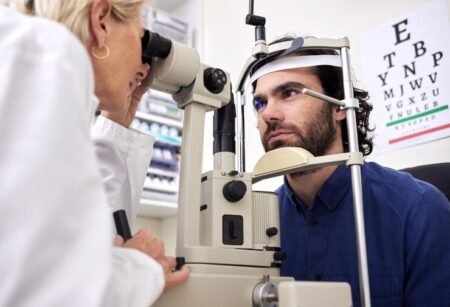
What Equipment is Used During an Eye Exam?
For practitioners in hospitals, optical labs, and private clinics, staying ahead of the curve means more than just having the right tools; it means integrating a workflow that balances patient comfort with clinical expertise.
In the current global eye care market, An eye exam uses tools like the Snellen chart (for vision), phoropter/autorefractor (to find your prescription), slit lamp (microscope for front of eye), ophthalmoscope (to view the retina), and tonometer (to check eye pressure for glaucoma) to assess vision clarity, determine lens power, and examine eye health, detecting issues like cataracts, glaucoma, and retinal problems.
For Vision & Prescription
-
Visual Acuity Chart
-
The Autorefractor and Keratometer
-
Digital Phoropters & Manual Phoropters
| Feature | Manual Phoropter | Digital Phoropter (e.g., Shanghai LINK) |
| Data Entry | Manual dial turning | Automatic sync from Auto-Refractor |
| Patient Comfort | Standard | Reduced face-to-face proximity (Hygenic) |
| Precision | High | Ultra-High (0.12D increments) |
| Speed | Moderate | Fast-switching for immediate comparison |
For Eye Health & Structure
-
Slit Lamp (Biomicroscope)
The Slit Lamp is the most critical piece of Optometry Equipment for physical examination. It allows the doctor to see the eye in microscopic detail under various lighting conditions.
What the Slit Lamp detects:
-
- Cornea: Scratches, infections, or swelling.
- Iris & Lens: Early signs of cataracts or inflammation.
- Eyelids: Blepharitis or meibomian gland dysfunction.
Shanghai LINK’s Slit Lamps are engineered with high-definition optics that provide the clarity required for complex surgical referrals in hospital settings.
-
Optical Coherence Tomography (OCT)
OCT machine is a non-invasive imaging test that uses light waves to take cross-section pictures of your retina. It is the gold standard for managing:
-
- Age-related Macular Degeneration (AMD).
- Diabetic Retinopathy.
- Glaucoma progression.
-
Retinal Camera and Optomap:
Captures images of the retina for detailed monitoring and diagnosis of disease. While a standard Retinal Camera captures a high-resolution 45-degree view of the fundus, the Optomap (by Optos) provides an ultra-widefield 200-degree image. This allows practitioners to see peripheral retinal tears that might be missed during a traditional undilated exam.
-
Ophthalmoscope (or Retinoscope):
A handheld device shining light into the eye to view the retina, optic nerve, and blood vessels at the back.
-
Non-Contact Tonometer (NCT)
Screening for Intraocular Pressure (IOP) is a mandatory step for glaucoma detection. While traditional “air puff” tests are common, many clinics now incorporate the Shanghai LINK Tonometer.
Why Shanghai LINK?
Unlike traditional tonometers, Shanghai LINK uses rebound technology that is so gentle it does not require anesthetic drops, making it the preferred choice for pediatric and sensitive patients.
Other Eye Exam Machine Tools
-
Trial Frame & Lenses:
A frame holding various lenses to fine-tune prescriptions.
-
The Infrastructure: Chair & Stand Units
The efficiency of an exam is often dictated by the layout of the room. A professional Chair & Stand Unit integrates the Slit Lamp, Phoropter, and Charging Wells into a single ergonomic footprint.Essential Components of a Modern Exam Suite:
-
- Motorized Patient Chair: For precise height adjustment.
- Counterbalanced Arm: To hold the Phoropter effortlessly.
- Integrated Control Panel: To manage room lighting and instrument power.
Choosing Reliable Eye Exam Equipment: Why Shanghai LINK?
When selecting suppliers, experience, expertise, authority, and reputation are paramount. Shanghai LINK. embodies these values through the following aspects:
- Over 15 years of experience: Established in 2009, the company integrates R&D, design, and manufacturing.
- Stringent quality control: All products are certified under ISO 9001, ISO 13485, CE, and FDA standards.
- Modern manufacturing: The Shanghai facility employs advanced optical inspection technology to ensure consistent performance in every ophthalmic device.
- Comprehensive product range: From chairs and stands to LCD visual acuity charts, the company provides complete solutions for clinics and hospitals.
For optical labs, clinics, and hospitals looking for reliable Optical Lab Machinery and diagnostic tools, Shanghai Link Instruments is your partner in precision.
Elevate Your Clinical Workflow Today
Contact our expert team for a customized equipment consultation:
- Official Website: linkeyegroup.com
- Email: tonyjelson7@gmail.com
- Location: Shanghai, China
FAQs
Q: What are the must-have eye exam machines for a new clinic?
Q: Is Shanghai LINK equipment certified for use in the USA and Europe?
Q: How does a Retinoscope differ from an Auto-Refractor?
Q: Can i still drive if you fail a field vision test?
Q: What is the cost of OCT machine?
A: The price of optical coherence tomography (OCT) equipment varies significantly, ranging from under $10,000 for basic or refurbished models to over $100,000 for advanced systems. Typical clinical diagnostic devices cost between $20,000 and $100,000, depending on features such as speed, resolution, multimodal integration, and whether the unit is new or used. Entry-level equipment is priced around $30,000 to $50,000, while high-end, research-grade, or surgical-grade systems can reach $150,000 or more.
Conclusion
Ophthalmic examinations rely on mature clinical techniques and advanced ophthalmology diagnostic equipment. For optometrists and healthcare providers, investing in reliable eye exam machine is not merely a technical decision but a strategic one—in an increasingly competitive eye care environment, it enhances diagnostic accuracy, optimizes workflow, and builds patient trust.


