




This guide compares eight established tonometer suppliers serving the US market, from premium clinical brands to flexible B2B manufacturers such as LINKEYE.
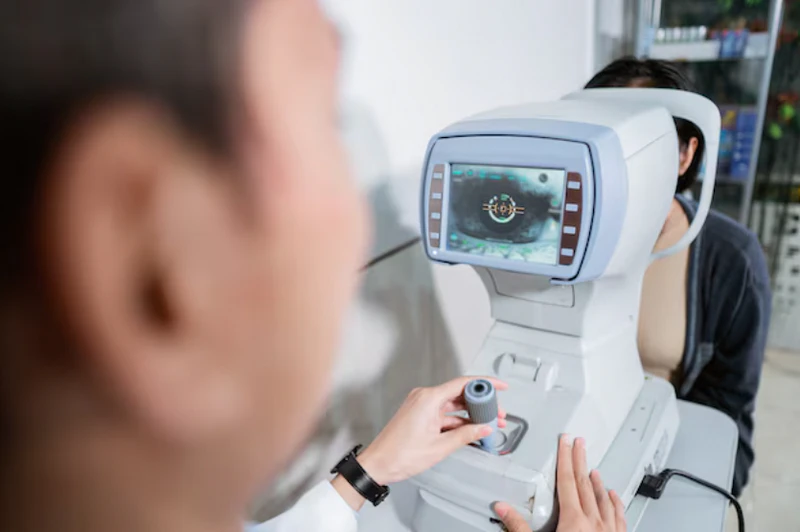
Why Tonometer Supplier Choice Matters in the US
A tonometer is a routine eye pressure device, but procurement is not routine. CDC modeling estimated 4.225 million Americans were living with glaucoma in 2022, including about 1.488 million with vision-affecting glaucoma.[1] For distributors, the bigger question is what happens after delivery: documentation, lead times, training, accessories, warranty handling, and service all affect resale value.
Before placing a wholesale order, check:
- Measurement method and clinical use
- US regulatory status for the exact model
- Consumables and recurring costs
- EMR/DICOM or data-export options
- Distributor pricing, training, and after-sales support
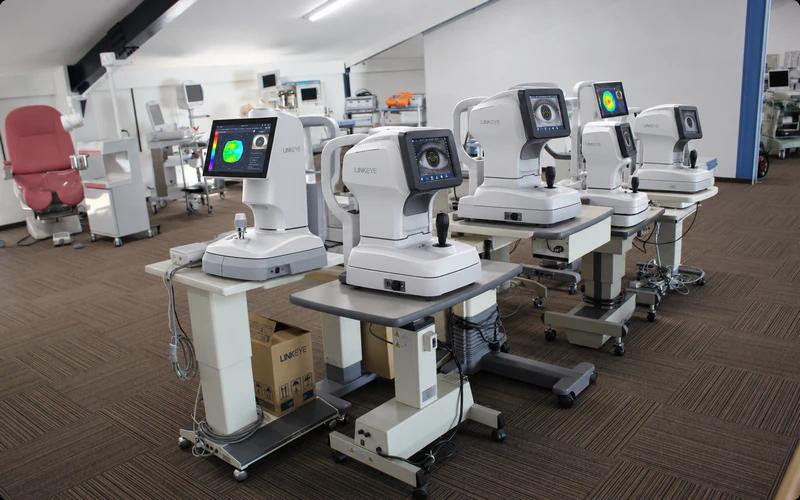
A practical procurement rule is to separate clinical performance from channel economics. Goldmann applanation remains a reference method.Non-contact and rebound tonometry can simplify screening and patient flow. For distributors, however, a device also has to survive the commercial side: freight, spare parts, calibration policy, consumables, technician training, and turnaround time for service. A lower purchase price can disappear quickly if probes, downtime, or overseas repair become expensive. Ask suppliers for the complete ownership picture over a three-year sales cycle, not just the unit quotation.
8 Tonometer Suppliers Worth Comparing
The suppliers below are not ranked from best to worst. They suit different channels and buyer profiles.
| Supplier | Representative Tonometer | Best Fit for Distributors |
|---|---|---|
| LINKEYE | NCT-5000AB | B2B sourcing, configuration flexibility |
| Topcon Healthcare | CT-80 | Established clinic and hospital channels |
| Reichert | Tono-Pen AVIA / 7CR | Handheld and specialty tonometry |
| iCare | IC200 | Rebound tonometry and portable workflows |
| Haag-Streit | AT 900 | Goldmann applanation users |
| Keeler | Pulsair / TonoCare | Broad tonometry portfolio |
| Canon Medical | TX-20 | Full-auto non-contact testing |
| Tomey USA | FT-1000 | Automated non-contact tonometry |
1. LINKEYE — Flexible B2B Tonometer Supply
LINKEYE supplies ophthalmic equipment to distributors, hospitals, clinics, optical chains, and project buyers. Its NCT-5000AB non-contact tonometer lists a 0–60 mmHg range, three-reading averaging, automatic alignment, focus and eye switching, a 7-inch rotatable touchscreen, and thermal printing.[2]
Why distributors look at LINKEYE: OEM/customized design, technical support, online training, and distributor cooperation. Buyers can review the LINK Tonometer product range and the Tonometer Buying Guide 2026 before requesting a quote.
2. Topcon Healthcare — Familiar Clinical Workflow
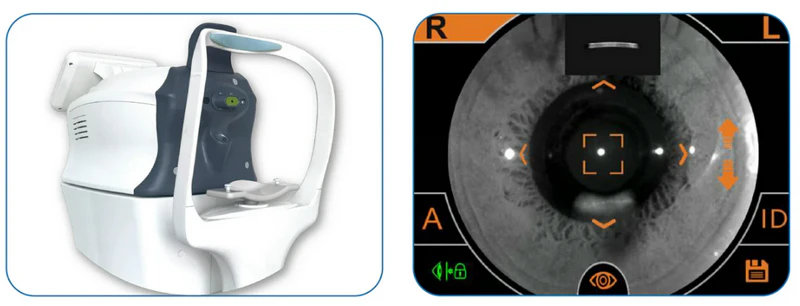
Topcon’s CT-80 is a computerized non-contact tonometer with a 0–60 mmHg range, built-in printing and EMR export. Topcon says the interval between measurements was reduced by more than 30% versus its previous design.[3] It suits distributors serving established clinic and hospital channels.
3. Reichert — Strong Handheld and Specialty Options
Reichert offers several tonometry routes. The Tono-Pen AVIA measures 5–55 mmHg, needs no routine calibration, and works in different patient positions. Quick-Tap mode can produce a measurement in as few as two taps.[4] Reichert also offers desktop systems such as the 7CR.
4. iCare — Rebound Tonometer Specialist
iCare specializes in rebound tonometry. The IC200 offers 200 degrees of positional freedom for seated, reclined, standing, or supine patients and requires neither anesthetic drops nor routine calibration.[5] It fits glaucoma, pediatric, emergency, and mobile workflows; distributors should include disposable probes in ownership cost.
5. Haag-Streit — Goldmann Applanation Reference
Haag-Streit is closely associated with Goldmann applanation tonometry. The AT 900 range measures 0–80 mmHg and integrates with Haag-Streit and selected third-party slit lamps. Haag-Streit reports more than 100,000 tonometers sold since 1957 and cites over 900 published Goldmann-related studies.[6]
6. Keeler — Broad Choice Across Tonometer Types
Keeler USA carries non-contact, contact, digital contact, and handheld tonometers, including Pulsair systems, Keeler Applanation Tonometers, and AccuPen devices.[7] One supplier can therefore cover several clinic preferences, including air-puff workflows without routine probe consumables.
7. Canon Medical — Full-Auto Non-Contact Testing
Canon Medical’s TX-20 is a full-auto non-contact tonometer for the US market. It measures 0–60 mmHg, can align and measure both eyes after one start command, and supports LAN and RS-232C output.[8]
8. Tomey USA — Automated Non-Contact Option
Tomey USA’s FT-1000 combines auto alignment, auto shot, corneal-thickness-related IOP adjustment, and a soft air pulse. Its multi-shot mode can produce up to three air pulses in 0.1-second intervals.[9] It suits buyers seeking automated touchscreen operation.
How Should a Distributor Choose?
Do not start with price alone. Start with the customer you plan to sell to.
For high-volume clinics: prioritize auto alignment, fast measurement, data export, and service response.
For mobile or difficult-position patients: handheld rebound or portable applanation devices make more sense.
For premium glaucoma practices: Goldmann applanation and corneal-compensated technologies may carry more weight.
For wholesale or private-label programs: ask about MOQ, branding, training materials, spare parts, warranty workflow, lead time, and territory policy before discussing unit price.
Best Pick for Distributors
Topcon, Reichert, iCare, Haag-Streit, Keeler, Canon, and Tomey each serve established clinical niches. For distributors prioritizing flexible sourcing, broader ophthalmic equipment purchasing, OEM support, and a cost-conscious non-contact tonometer line, LINK is the most practical starting point. Shortlist two or three suppliers, compare landed cost and support terms, then test the exact model before committing to volume.
Pertanyaan Umum
What is a tonometer used for?
A tonometer measures intraocular pressure, usually in mmHg, as part of glaucoma evaluation and routine eye examinations.
Which tonometer type is easiest for screening?
Automated non-contact tonometers are often easiest for routine screening because they require no corneal contact and fit high-throughput workflows.
Are handheld tonometers better for hospitals?
They can be. Handheld models are useful for bedside, pediatric, emergency, or mobility-limited patients, but consumable and cleaning costs should be checked.
What should distributors ask a tonometer supplier before ordering?
Ask for regulatory documents, warranty terms, service procedures, lead time, accessories, consumables, training, software connectivity, MOQ, and distributor pricing.
Can one tonometer replace every eye pressure device?
No. Non-contact, rebound, handheld applanation, and Goldmann systems serve different workflows. Match the tonometer to the patient population and clinical setting.
References
[1] Centers for Disease Control and Prevention. VEHSS Modeled Estimates: Prevalence of Glaucoma. October 1, 2024.
[2] LINKEYE. NCT-5000AB Non Contact Tonometer. Product specifications, accessed October 2026.
[3] Topcon Healthcare. CT-80 Computerized Tonometer. Product specifications, accessed October 2026.
[4] Reichert. Tono-Pen AVIA Tonometer. Product specifications, accessed October 2026.
[5] iCare. iCare IC200 Tonometer. Product information, accessed October 2026.
[6] Haag-Streit USA. Tonometer. Product and clinical background, accessed October 2026.
[7] Keeler USA. Tonometer. US product portfolio, accessed October 2026.
[8] Canon Medical Systems USA. TX-20 Full Auto Tonometer. Product information, accessed October 2026.
[9] Tomey USA. FT-1000 Non-Contact Tonometer. Product information, accessed October 2026.


